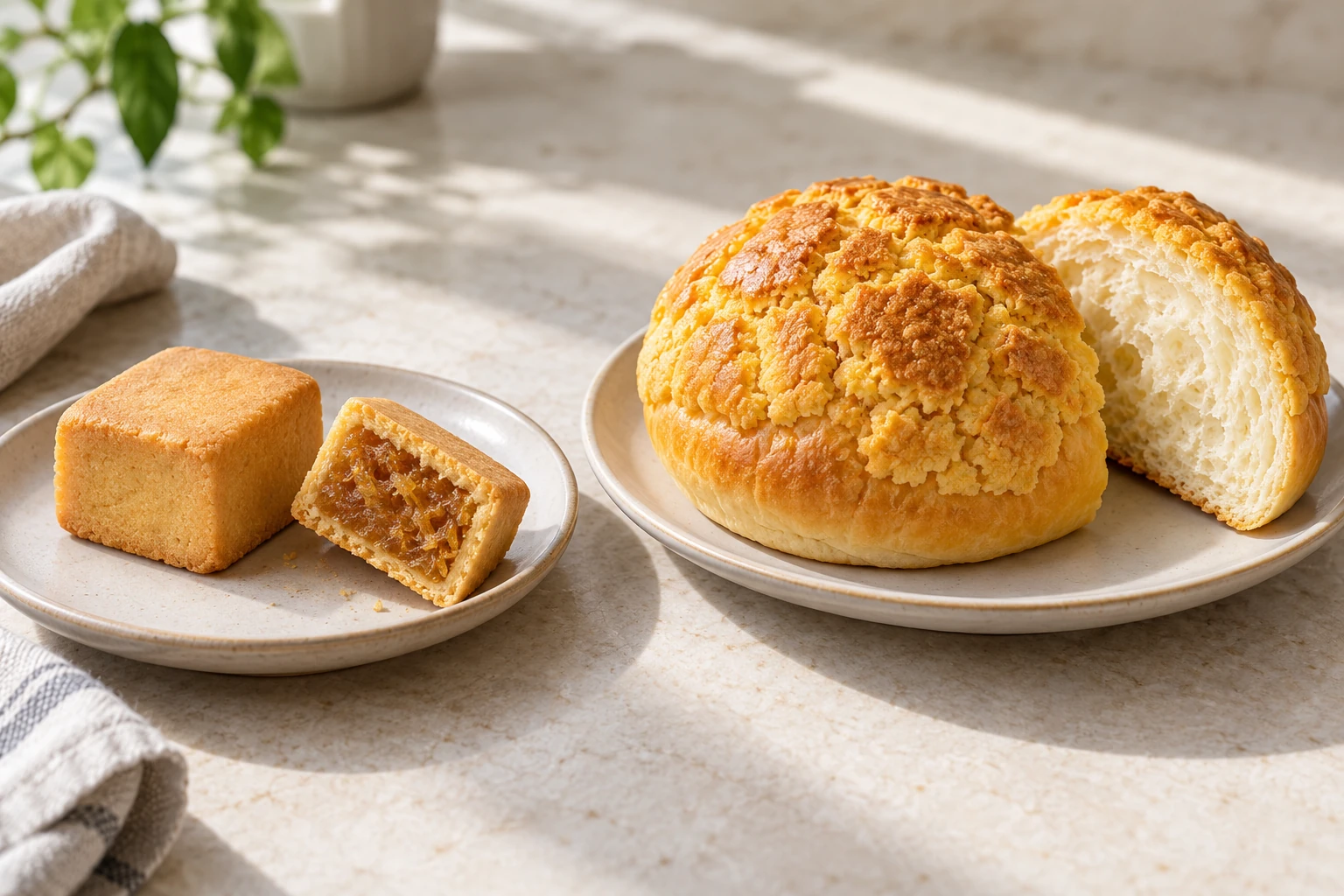
Image note: AI-generated editorial illustration of Taiwanese pineapple cake and Hong Kong pineapple bun; individual preparations vary.
Taiwanese pineapple cake is a small pastry with a crumbly crust and a pineapple-based filling. A traditional Hong Kong pineapple bun is soft bread with a crisp, sweet topping and usually no pineapple. The cake’s name points to its filling; the bun’s name points to its appearance.
To choose between them, start with whether you want a filled pastry or a bread roll. Then check what the bakery has put inside its particular version.
The difference at a glance
| What to compare | Taiwanese pineapple cake | Hong Kong pineapple bun |
|---|---|---|
| Chinese name | 鳳梨酥, fènglí sū | 菠蘿包, commonly written bolo bao on English menus |
| Outer structure | Crumbly pastry enclosing a filling | Soft bread beneath a crisp, cookie-like top |
| Typical center | Pineapple-based filling, sometimes blended with winter melon | Plain bread in a classic unfilled version; filled versions also exist |
| Why “pineapple”? | Refers to the fruit used in the filling | Refers to the pineapple-like surface pattern |
| Main contrast in a bite | Pastry shell against soft fruit filling | Crisp sweet topping against fluffy bread |
What each name identifies
In this comparison, pineapple cake means the Taiwanese pastry called 鳳梨酥, not a slice of sponge cake or an American pineapple upside-down cake. Taiwan’s Ministry of Education dictionary describes a shaped, baked sweet with a soft filling and a crumbly exterior. Its common ingredients include pineapple, winter melon, butter, egg, flour, and sugar.
The familiar square pastry is the form covered by the Atlas record. Shape can help you recognize it, but the filled pastry structure matters more than whether a particular piece is perfectly square.
Pineapple bun means 菠蘿包, also written 菠萝包 in simplified Chinese. Bolo bao is a common Cantonese-based menu spelling. It is a bread roll with a separate sweet topping, not a larger version of the Taiwanese cake. King Arthur Baking’s explanation describes the contrast between fluffy milk bread and a crunchy, cookie-like surface.
Why both names say pineapple
For the cake, pineapple is part of the filling story. Taiwan Agriculture Tourism distinguishes pure-pineapple filling from a traditional white-gourd blend. White gourd is also known as winter melon, 冬瓜. A blend is one documented formulation, not evidence that every pineapple cake has the same ingredients or fruit proportion.
For the bun, pineapple describes the look of the topping rather than the classic recipe’s fruit content. The Kitchn’s account connects the name to the yellow surface and crosshatch pattern, and notes that some bakeries leave the topping crackly without scoring a grid. A bun does not have to display neat diamond shapes to fit that description.
So the cake is the one normally associated with an actual pineapple filling. The traditional bun usually contains neither pineapple fruit nor juice. That distinction describes the familiar forms; it does not rule out a bakery making a fruit-filled variation.
Crust, filling, texture, and serving
Taiwan Agriculture Tourism describes pure-pineapple versions as retaining fruit fiber and tartness, while winter-melon blends can have a rounder sweetness. Those are useful tendencies, not a sweetness ranking that applies to every brand.
You can eat either by hand. Choose pineapple cake if you want a small pastry with a fruity filling, or a pineapple bun if you prefer soft bread with a crunchy top. A butter-served bun is another documented presentation: the Hong Kong Tourism Board describes pineapple buns paired with a slab of butter. Butter is an addition, not a required hidden filling in every bun.
How to choose at an Asian bakery in the US
Start with the label, then compare the structure. Look for 鳳梨酥 when you want the Taiwanese pastry and 菠蘿包 or bolo bao when you want the bread roll. An English label that says only “pineapple cake” may need clarification; ask whether it means the filled Taiwanese pastry.
If a cut piece or product photo is available, look inside. A pastry shell around a compact fruit filling suggests the cake. A bread crumb under a sweet crust suggests the bun. This is more useful than judging by golden color alone.
Ask one specific question: “What is inside this version?” For a cake, that can clarify pure pineapple versus a winter-melon blend. For a bun, it can distinguish plain bread, custard, butter, or another filling. King Arthur’s recipe includes optional custard, while the Tourism Board also documents a pork-chop pineapple-bun presentation. Neither name guarantees that the product in front of you is plain or entirely sweet.
For a closer look at the pastry, see the Taiwan Pineapple Cake record, or Explore the Atlas to compare desserts by ingredients and texture.