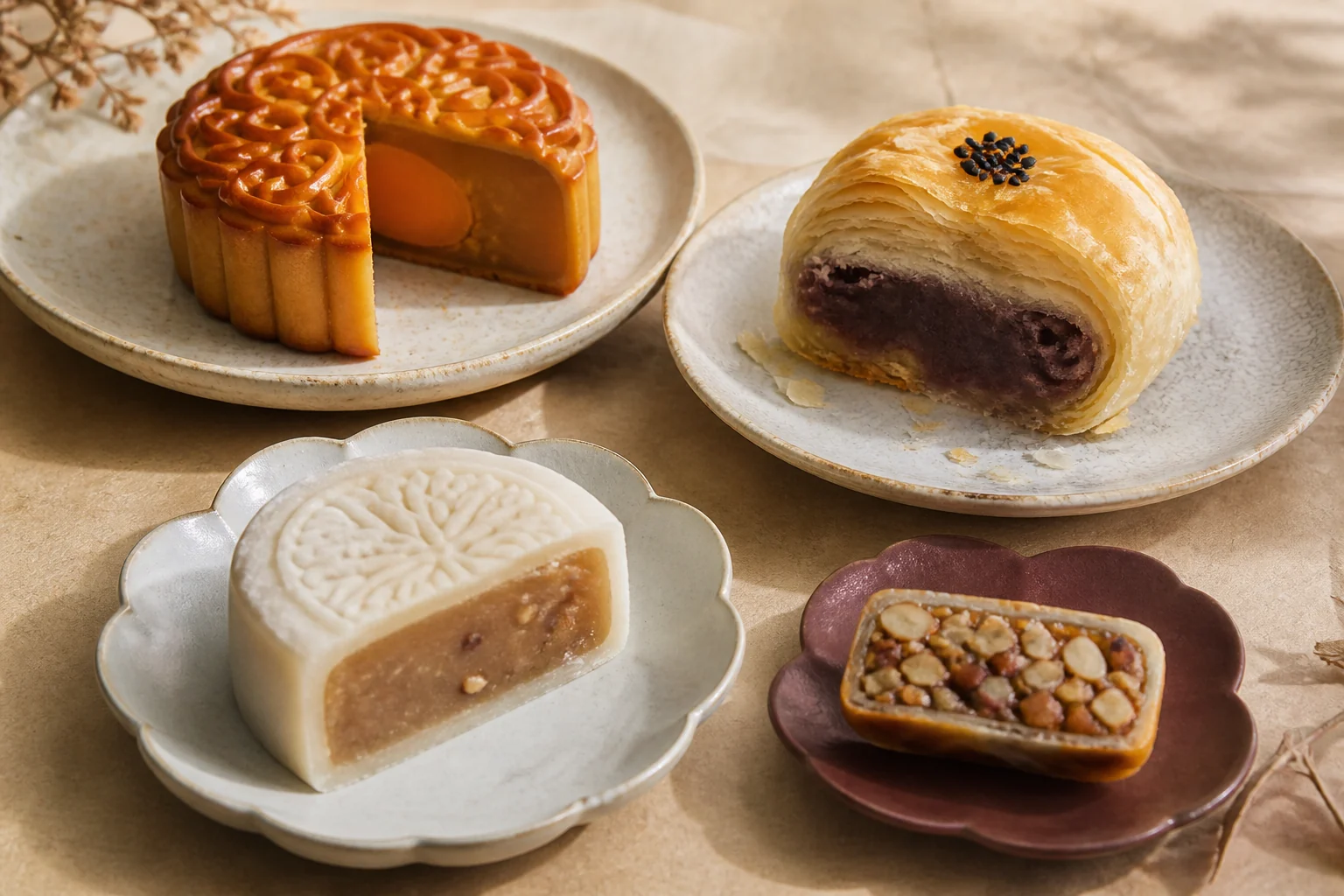
Mooncakes do not have one fixed taste. Depending on the crust and filling, a mooncake can be smoothly sweet, nutty, sweet-salty, flaky and savory, or soft and chilled. For a first purchase, read the filling name first and the wrapper style second.
This beginner guide maps the main choices without treating one sample as the whole category. For the stable bilingual identity and core attributes, see the Mooncake Dessert Record.
What does a mooncake taste like?
A common baked Cantonese-style mooncake has a thin, tender crust around a dense filling, so the center supplies most of the flavor. Lotus seed and red bean pastes are generally sweet; salted egg yolk adds a salty, firm center; five-nut fillings add roasted flavor and a more varied bite. Other regional styles can be flaky or savory, while snow-skin mooncakes are soft and served chilled.
The Smithsonian National Museum of Asian Art describes mooncakes as Mid-Autumn pastries with sweet or savory fillings. That range is why the word “mooncake” alone cannot predict the experience.
How do the most common fillings differ?
- Lotus seed paste (莲蓉, liánróng): commonly mild, sweet, smooth, and compact. Sweetness and oiliness vary by producer.
- Red bean paste (豆沙, dòushā): sweet with a recognizable cooked-bean character; it may be completely smooth or retain some texture.
- Five-nut (五仁, wǔrén): a textured mixture of nuts and seeds. Depending on the formula, it can lean sweet, savory, or both.
- Salted egg yolk (咸蛋黄, xián dànhuáng): a salty, firm-to-grainy center usually surrounded by a sweeter paste.
For label terms, allergen cautions, and a closer comparison, continue to Mooncake Fillings Explained.
How does the crust change the experience?
| Wrapper | Typical texture direction | What it changes |
|---|---|---|
| Thin baked crust | Tender and close to the filling | The dense center dominates each bite. |
| Flaky baked pastry | Layered and crumbly | The crust contributes more texture and baked aroma. |
| Snow skin | Soft, chewy, and chilled | Temperature and wrapper chew become part of the experience. |
“Baked” is not one uniform style: Cantonese and Suzhou examples can both be baked while having very different crusts. Compare the four regional families in the Regional Mooncake Starter Guide, or focus on wrapper and storage in Snow Skin vs Baked Mooncakes.
Which mooncake should a beginner try first?
Start from a flavor and texture you already enjoy:
- Choose plain lotus seed paste for a smooth, mild sweet starting point.
- Choose red bean if you already enjoy sweet bean buns, soups, or rice-flour sweets.
- Add one salted egg yolk if sweet-salty contrast appeals to you.
- Choose a flaky style if pastry layers matter more than a dense paste center.
- Choose snow skin if you prefer cold desserts and a soft, mochi-like chew.
- Choose five-nut if roasted nuts, seeds, and varied texture sound appealing—and check the allergen label carefully.
If possible, share a small assortment and compare wedges. Note the filling and crust of each piece so one unfamiliar flavor does not stand in for every mooncake.
What should you check before buying?
Check the full ingredient list, allergen statement, date mark, package condition, and storage directions. In the United States, the FDA advises people with food allergies to read all ingredient information, even when a separate “Contains” statement appears. Formulas can change between products and seasons.
Cold products need extra planning. Snow-skin and ice-cream mooncakes require temperature control; follow the package and the food-safety guidance that applies where you live. Do not infer one universal shelf life from another brand or a homemade recipe.
The short answer
A mooncake tastes like its filling, crust, and serving format—not like one standardized cake. Smooth sweet pastes are the easiest entry point, egg yolk adds salt, nuts add texture, flaky pastry changes the balance, and snow skin adds a chilled chew. Choose one variable at a time, then explore the rest of the cluster.