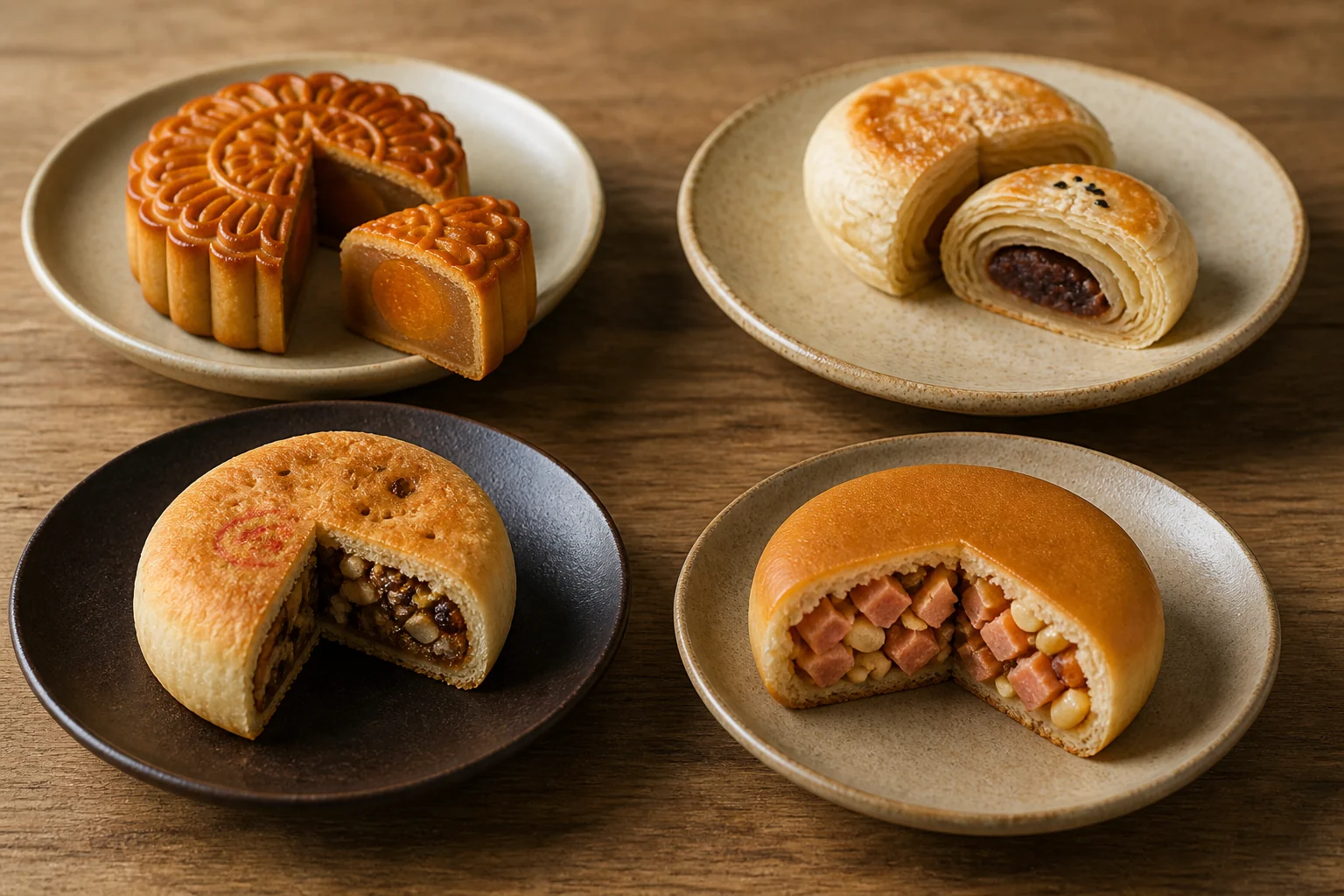
Cantonese, Suzhou, Beijing, and Yunnan mooncakes are regional style families, not four fixed recipes and not a complete ranking of Chinese mooncakes. Their names help predict the crust, texture, and likely flavor direction; the producer and ingredient label determine the actual product.
For basic identity, use the Mooncake Dessert Record. For a beginner taste map before comparing regions, see What Does a Mooncake Taste Like?.
How do the four regional styles compare?
| Style | Crust | Texture | Typical flavor direction | Representative fillings |
|---|---|---|---|---|
| Cantonese 广式 (Guǎngshì) | Thin, tender baked shell | Soft shell around a dense center | Commonly sweet; sweet-savory versions exist | Lotus seed, red bean, five-nut, salted egg yolk |
| Suzhou 苏式 (Sūshì) | Flaky, layered pastry | Crisp and crumbly | Sweet or savory | Bean or nut pastes, jujube, seasoned pork |
| Beijing 京式 (Jīngshì) | Syrup-based or flaky pastry, depending on subtype | Firmer, crisp, soft, or flaky | Sweet or savory; intensity varies by subtype and producer | Rock sugar, nuts, seeds, osmanthus, rose |
| Yunnan 滇式 (Diānshì) | Hard, flaky, or soft shells occur | Varies with the subtype | Often sweet-salty in ham versions; floral in rose versions | Yunnan ham, nuts, candied ingredients, edible rose |
Cantonese mooncakes: thin crust and dense filling
Cantonese-style mooncakes commonly use a wheat-flour crust made with syrup, oil, and alkaline water, then formed, egg-washed, and baked. A Beijing market-regulator consumer guide describes the resulting crust as soft. The shell sits close to the filling, so lotus seed, red bean, nuts, or egg yolk usually dominate the bite.
This is a style association rather than a historical-origin claim. Cantonese products still differ by bakery, filling, and season.
Suzhou mooncakes: flaky layers and sweet or savory centers
Suzhou-style mooncakes use a separate oil dough to create flaky layers. The same official consumer guide describes the style as crisp or flaky, while documented regional overviews include both sweet versions and savory fresh-meat versions.
The crust is the fastest visual clue in a Cantonese-versus-Suzhou comparison: a smooth thin shell versus distinct pastry layers. Ask about the filling before buying because the style name does not tell you whether a particular cake is sweet or savory.
Beijing mooncakes: several northern subtypes
Beijing-style mooncakes include more than one crust method. The Beijing consumer guide describes syrup-based and soft-flaky doughs, with sweet and savory products and textures ranging from flaky to soft. Named subtypes such as zilaihong, zilaibai, and fanmao can look and feel different.
Claims that Beijing mooncakes are always less sweet are too broad. Some formulas use less sugar than particular comparison styles, but sweetness varies by subtype, filling, and producer.
Yunnan mooncakes: ham and rose examples
Yunnan ham mooncakes (云腿月饼, yúntuǐ yuèbǐng) commonly combine cured Yunnan ham with a sweet component in a baked shell. Rose-filled pastries are another associated Yunnan form. Hard-shell, flaky, and soft-shell versions have been documented, so “Yunnan” does not imply one crust.
Ham, lard, nuts, or other animal-derived ingredients can appear in some versions. Check the specific label rather than treating the regional name as a dietary statement.
Which regional style should you try?
- Try Cantonese for a thin shell and dense paste-centered structure.
- Try Suzhou for flaky pastry; confirm whether the filling is sweet or savory.
- Try a named Beijing subtype if you want to explore firmer or flaky northern pastry forms.
- Try Yunnan ham for sweet-salty cured-meat notes, or a rose version for a floral direction.
None is more “authentic” than the others. These are regional style associations with internal variation. For the filling vocabulary behind many examples, see Mooncake Fillings Explained; for serving and storage differences, see Snow Skin vs Baked Mooncakes.